
Keynote Speakers

Madeleine McManus OAM
Chair, Yarra Trams; Global Director, Robogals and CEO, Centre for Professional Engineering Education
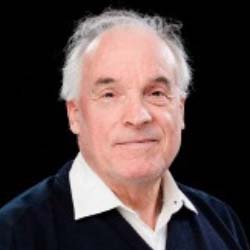
Emeritus Professor James Trevelyan
Engineer, Educator, Researcher & Entrepreneur

Odette Maher
Monash Student
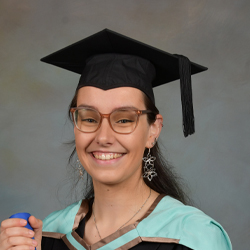
Selina Porritt
Monash Graduate

David Loven
Monash Student
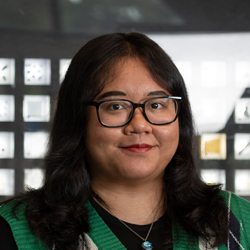
Ratu Esther-Kelvin
Monash Student
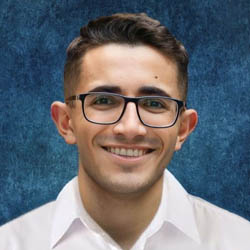
Jason Abi Chebli
Monash Student
Prof Nicoleta Maynard
Moderator
Student Panel: Students Re-engineering the Future of Education
This panel gives engineering students and recent graduates the chance to talk openly about how they would redesign their learning, what might need to change, and whether the CDIO framework fits with real-world practice. Expect honest opinions, fresh ideas and big questions around diversity, sustainability, hands-on learning, and how students can help shape the future of education.
Madeleine McManus OAM, FIEAust, NER, CPEng, EngExec is a distinguished engineer and trailblazing leader with over 25 years of experience across diverse sectors. An innovator, disrupter and multidisciplinary problem solver. She was the first woman to chair Engineers Australia in Victoria, where she led the engineering response to the Black Saturday Fires. She designed and launched an internationally recognised collaboration program that bridges industry and academia, winning three national awards of excellence.
As Project Director, she oversaw the creation of the world’s largest LEGO suspension bridge for the 2019 World Engineering Convention in Melbourne. Her leadership has been widely recognised, including the John Shaw Medal from Roads Australia in 2024 for “outstanding and innovative leadership in transport and her continuing contribution”. In 2017, she was awarded the Medal of the Order of Australia for her services to engineering and education.
Emeritus Professor James Trevelyan is an engineer, educator, researcher and recently a start-up entrepreneur.
He invented Coolzy, new energy saving, low emissions air conditioning technology for a global market.
His research on engineering practice helped define the Engineers Australia professional competencies for chartered engineers. His books “The Making of an Expert Engineer” and “Learning Engineering Practice” are influencing the future of engineering education in universities and workplaces.
He is best known internationally for pioneering research on sheep shearing robots from 1975 till 1993 and for the first industrial robot that could be remotely operated via the internet in 1994, one of the earliest demonstrations of the ‘internet of things’. He also made significant contributions to help with the removal of anti-personnel landmines and other unexploded ordnance in many countries.
His recent research has helped clarify significant factors that make economic and social development in the Global South more challenging than in wealthier countries. His research offers several unconventional measures that could contribute significant improvements in progress towards the UN Sustainable Development Goals.
Web pages:
https://www.coolzy.com/
https://JamesPTrevelyan.com/
https://research-repository.uwa.edu.au/en/persons/james-trevelyan
https://www.linkedin.com/in/jtrevelyan/
Strengthening CDIO
CDIO’s strength is its emphasis on implementing and operating, not just designing and problem-solving. However, traction among faculty seems to be stagnating and interpretations are widening, blurring distinction from other project-based learning methods.
CDIO claims to be based on what engineers really do though the evidence base is thin. The lack of rigour may be undermining the success of this worthwhile initiative.
In this talk I will re-examine the intellectual foundations of engineering. By doing so, I will argue that contemporary engineering scholarship (and education) continues to omit most of what engineers do, pointing to the need to revisit our definitions of engineering, and engineers.
Implementing and operating are not the only omissions, however. Collaboration is essential in engineering, but it doesn’t happen automatically when people work together in groups. Engineers have devised special collaboration methods over the centuries, methods than could be taught.
Another omission is the influence of business. Students could learn why traditional models of economic decision-making in engineering cannot explain what really happens in practice. Students could also be more aware of the need, and methods, to improve current low standards of project delivery performance.
Perhaps the most serious omission is the significance of complex socio-technical interactions in engineering practice, considerably greater than most faculty presume. This omission enables engineers to claim that most of what they do is non-technical and therefore not real engineering.
This omission might be remedied by helping students understand that engineering education itself is a collaborative endeavour relying on complex socio-technical interactions. Faculty could embrace well-researched and highly effective teaching methods and, by doing so, make teaching easier and more enjoyable. Such a change, easily implemented within the CDIO framework, could strengthen both the evidence base for CDIO and its appeal.
Abstract coming soon
I am currently studying Civil Engineering and Economics here at Monash, where I have been able to extend my horizons and interests. Last summer I had the privilege of studying an elective “Urban Sustainability” in India and exploring a new culture. I also love being involved in student politics, and was elected President of the Monash Jewish Student Society for 2025.Selina is a Process Engineer in the Water Infrastructure section of Jacobs, Melbourne. She studied a Bachelor of Engineering and a Bachelor of Pharmaceutical Science, and graduated at the end of 2023. During her last two years of studies she also worked at Monash University as a Teaching Assistant for a first year engineering unit, Engineering Design. She is interested in water and wastewater treatment, and how engineers can work collaboratively for a sustainable future.Odette is in her final year of a Bachelor of Electrical and Computer Systems Engineering and Bachelor of Biomedical Science. She is passionate about making medical technology more accessible for regional, rural, and low-income Australians, so that no person has to choose between treatment or home. She hopes to offer insights into engineering education from her perspective as a queer woman.Ratu Esther-Kelvin is studying a Bachelor's of materials engineering and a Bachelor's of science, majoring in chemistry. With over two years of experience in teaching first year engineering alongside her studies as a Teaching Assistant and PASS ( Peer Assisted Study Sessions) leader for numerical modelling, she is invested in making education adaptable and accessible to different learning styles for students. Through various internships and research projects previously completed, she hopes to provide insights into the significance of having engineering education oriented towards providing students with exposure to industry and sustainable practices.
Jason Abi Chebli is a final-year Mechanical Engineering and Business Analytics student at Monash University. He has two years of experience teaching first-year engineering as a Teaching Associate and has served as the Undergraduate Representative on the Department of Mechanical and Aerospace Engineering’s Education Committee. Jason has been actively involved in student teams and has led award-winning engineering solutions recognised in both Australian and international competitions. He is passionate about applying first-principles engineering and design thinking to solve real-world challenges.I am currently studying Civil Engineering and Economics here at Monash, where I have been able to extend my horizons and interests. Last summer I had the privilege of studying an elective “Urban Sustainability” in India and exploring a new culture. I also love being involved in student politics, and was elected President of the Monash Jewish Student Society for 2025.